Data Released by the National Energy Administration: China’s Total Renewable Energy Installed Capacity Reaches 2.34 Billion kW by End of 2025
Data Released by the National Energy Administration: China’s Total Renewable Energy Installed Capacity Reaches 2.34 Billion kW by End of 2025
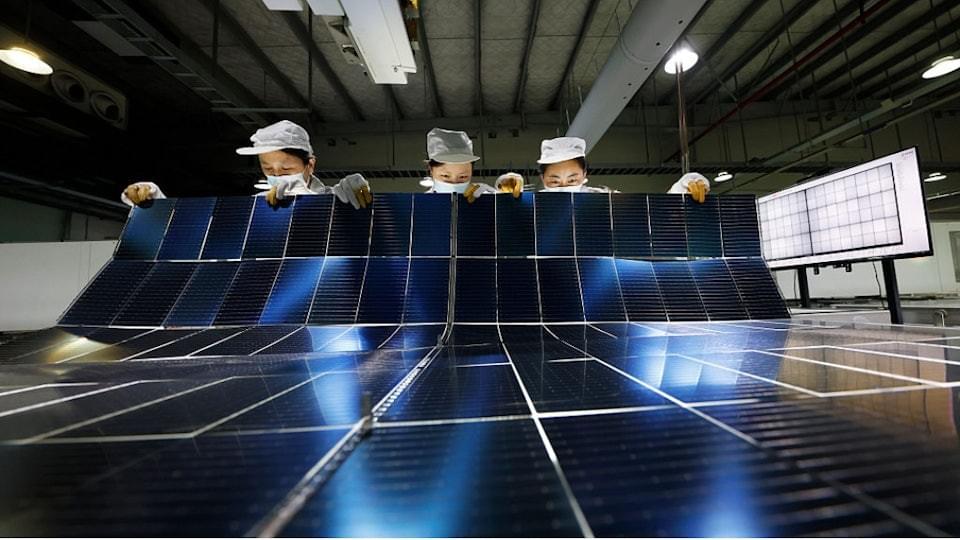
Data Released by the National Energy Administration: China’s Total Renewable Energy Installed Capacity Reaches 2.34 Billion kW by End of 2025
During the 14th Five-Year Plan period, China has built the world’s largest and fastest-growing renewable energy system, raising the share of renewable energy in total installed capacity from 40% to approximately 60%.
In 2025, three aspects demonstrated an unprecedented pace and intensity of development:
The combined installed capacity of wind and solar power historically surpassed that of thermal power (traditional fossil-fuel generation), increasing from 530 million kW in 2020 to 1.84 billion kW in 2025 — successively crossing 13 100-million-kW milestones.
New-type energy storage installed capacity broke through the 100-million-kW threshold for the first time, accounting for more than 40% of the global total. These “giant power banks” have made wind and solar generation significantly more stable. The annual trading volume of renewable energy green electricity certificates exceeded the cumulative total of all previous years, accelerating the establishment of mechanisms to promote green energy consumption.
**World’s Largest “Hualong One” Nuclear Power Base**
Zhangzhou Phase I Project Enters Operation, Expected to Generate 20 Billion kWh Annually, Filling a Global Industry Gap — A Major Breakthrough in China’s Clean Power Generation Sector
Behind these achievements is the continuous optimization of the energy supply structure. During the 14th Five-Year Plan period, China’s new energy sector achieved leapfrog development. Large-scale wind and solar bases in desert, Gobi, and wasteland regions (“Sha Ge Huang”) have become new powerhouses, adding more than 130 million kW of installed capacity. Integrated with ultra-high voltage (UHV) transmission projects, they enable green electricity to be delivered from remote areas. Currently, green electricity accounts for nearly 40% of China’s total social electricity consumption — meaning nearly 4 out of every 10 kWh consumed is green power.
Behind this is the progressive greening of the energy consumption structure. China has actively encouraged “driving green vehicles and using green electricity,” establishing the world’s largest electric vehicle charging network. Pilot programs for vehicle-to-grid (V2G) interaction have been launched in relevant provinces, transforming electric vehicles into “mobile power banks” and embedding the concept of green, low-carbon development deeply into public awareness.
Behind this are reforms and innovations in energy institutions and mechanisms. The green certificate and green electricity trading systems have been continuously improved, strongly stimulating demand for green power consumption. Market-oriented reforms of renewable energy grid-parity tariffs have been vigorously advanced, compelling power generation enterprises to “generate power intelligently” and “generate high-quality power.”
By building the world’s largest and fastest-developing renewable energy system and forming the world’s largest and most complete new energy industrial chain, China has made important contributions to the global low-carbon transition. During the 14th Five-Year Plan period, exported Chinese wind and solar products cumulatively helped other countries reduce carbon emissions by approximately 4.1 billion tonnes.