Guangdong Taipingling Nuclear Power Project Phase I Fully Completed and Operational – Greater Bay Area’s First “Hualong One” Units Now Online, Capable of Meeting Electricity Demand for Nearly 2 Million People
Guangdong Taipingling Nuclear Power Project Phase I Fully Completed and Operational – Greater Bay Area’s First “Hualong One” Units Now Online, Capable of Meeting Electricity Demand for Nearly 2 Million People
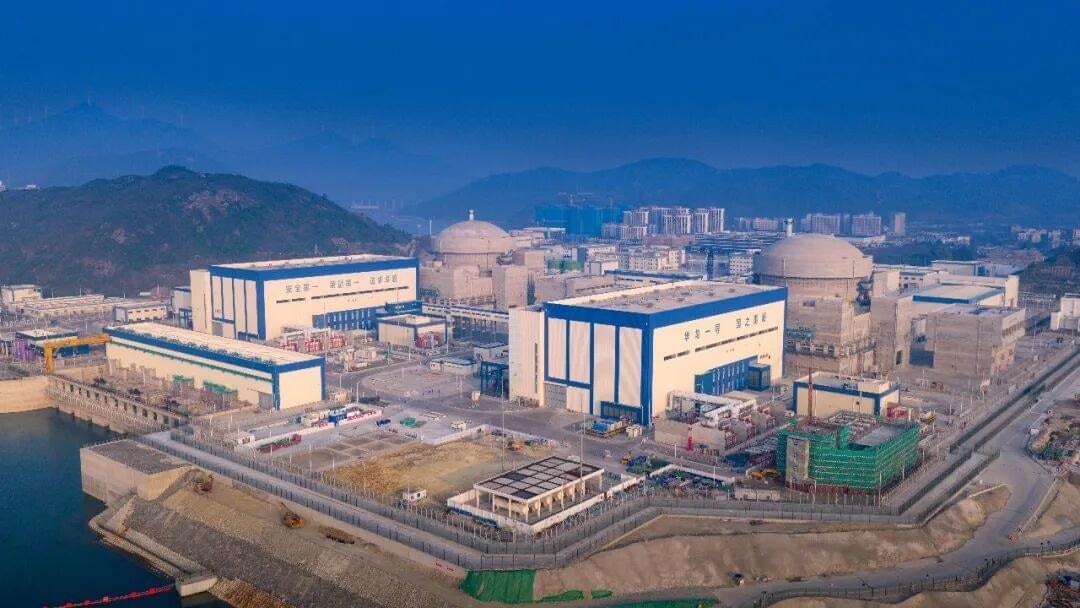
According to CCTV News, Unit 2 of China General Nuclear Power Group’s (CGN) Guangdong Taipingling Nuclear Power Project formally commenced commercial operation on 3 August, marking the full completion and commissioning of Phase I of the first “Hualong One” nuclear power project in the Guangdong-Hong Kong-Macao Greater Bay Area.
The newly operational Unit 2 employs China’s independently developed third-generation nuclear power technology “Hualong One,” which features complete intellectual property rights. The localization rate of its core equipment exceeds 90%, with a rated electrical output of approximately 1,200 MW per unit.
Located in Huidong County, Huizhou City, Guangdong Province, the Taipingling Nuclear Power Project is planned for construction in three phases comprising six “Hualong One” units in total. Once all six units are completed, the project’s annual on-grid electricity generation is expected to equivalently reduce standard coal consumption by about 15.02 million tonnes and cut carbon dioxide emissions by approximately 46.20 million tonnes each year.
Zhang Guoqiang, Chairman of CGN Huizhou Nuclear Power Co., Ltd., stated that, based on the average utilization hours of domestic nuclear power in 2025, the two units are projected to generate more than 18 billion kWh of electricity annually—sufficient to meet the production and living electricity needs of nearly 2 million people for one year. This will also equivalently reduce carbon dioxide emissions by about 16.63 million tonnes per year, further strengthening the clean energy supply security of the Greater Bay Area.
As reported by Yicai, nuclear power, as a clean energy source, plays a significant role in optimizing the energy structure, safeguarding energy security, building a new energy system, and helping achieve the “dual carbon” goals. On 31 July, the State Council executive meeting approved four nuclear power projects: Phase II of Zhejiang Jinqimen Nuclear Power, Phase III of Guangdong Taipingling Nuclear Power, Phase I of Liaoning Zhuanghe Nuclear Power, and Phase I of Shandong Laiyang Nuclear Power, totaling eight units.
Data from the National Energy Administration show that during the 14th Five-Year Plan period, a total of 46 nuclear power units were approved nationwide. Including the latest approvals, mainland China currently has 120 nuclear power units in operation, under construction, or approved pending construction, with a total installed capacity of 135 million kW. China’s scale of units under construction has ranked first in the world for consecutive years.
China’s Nuclear Power Installed Capacity Expected to Surpass the United States
According to the “15th Five-Year Plan Carbon Peaking Action Plan,” China’s operational nuclear power installed capacity is targeted to reach approximately 110 million kW by 2030. As of the end of 2025, the national operational nuclear power installed capacity stood at 62.52 million kW.
The United States currently leads the world with more than 96 million kW of operational nuclear power capacity. However, according to the *China Nuclear Energy Development Report 2026* blue book previously released by the China Nuclear Energy Association, China’s nuclear power installed capacity is expected to surpass that of the United States before 2030, becoming the world’s largest.