Hong Kong’s Blueprint for Growth: Aligning the First Five-Year Plan and 2026 Policy Address
Hong Kong’s Blueprint for Growth: Aligning the First Five-Year Plan and 2026 Policy Address
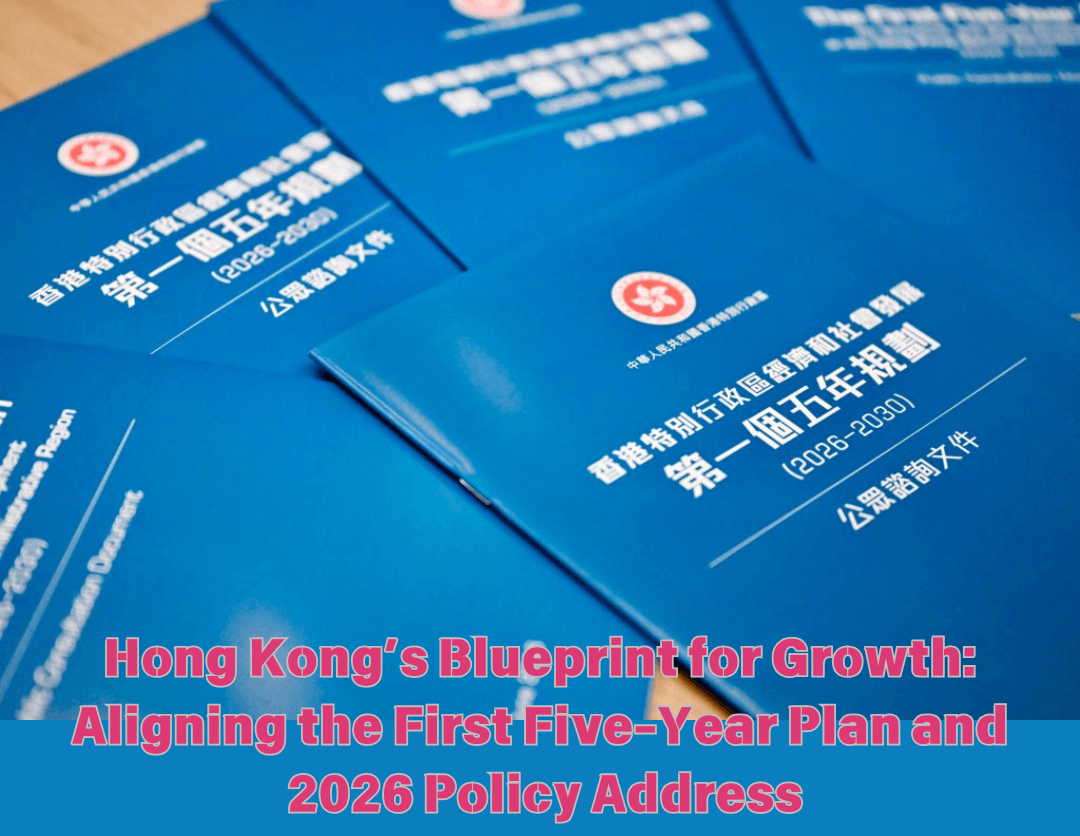
Hong Kong’s inaugural Five-Year Plan and the latest Policy Address were officially delivered today (September 16). Chief Executive John Lee revealed yesterday that the cover of the 1st Five-Year Plan features blue—symbolizing clear skies, openness, progress, and stability—while the 2026 Policy Address continues to use green, representing policy continuity, vitality, and hope. Together, these documents outline the blueprint for Hong Kong’s development over the next five years as well as concrete policy measures for the coming year. As the culmination of extensive public consultations that gathered wisdom across all sectors, local, mainland, and overseas stakeholders alike eagerly anticipate gaining deep insights from these documents to capture emerging opportunities, particularly regarding how Hong Kong will better align with national strategies.
The introduction of Hong Kong's first Five-Year Plan aims to synchronize directly with the Country’s 15th Five-Year Plan. It provides strategic direction for Hong Kong to integrate into and serve the overall national development while defining clear goals for the future. John Lee emphasized that this is not a planned economy, but rather a blueprint setting strategic directions and actionable implementation. Spanning a five-year horizon, this forward-looking, strategic, and actionable guide enables investors and individuals to make long-term plans and maximize policy potential. Crucially, aligning Hong Kong's plan with the national timeline ensures long-term policy continuity that spans across government administrations, avoiding the political uncertainty seen elsewhere. Built upon over 100 consultation sessions and more than 17,000 submissions, the plan synthesizes broad societal wisdom, ensuring seamless continuity across terms.
With the 15th National Five-Year Plan incorporating the Northern Metropolis for the first time to accelerate its construction, Hong Kong’s own 1st Five-Year Plan appropriately places the development as its opening section. Global businesses and talent are paying close attention to specific measures for expediting land release, boosting housing and economic site supply, and powering growth through university clusters, I&T development, and biomedical innovation. The blueprint is also expected to offer comprehensive action plans covering economic growth, public livelihoods, and regional cooperation—such as advancing the "Ten Centers," "Two Hubs," "One Ecosystem," and "One Talent Hub" initiatives. Moreover, it will detail improvements to local education, healthcare, housing, social welfare, and labor, alongside enhanced policies to facilitate Hong Kong residents living and working on the Mainland, showcasing Hong Kong's role as a bridge for East-West cultural exchange and high-quality, people-centric governance.
While the 1st Five-Year Plan carries historic significance, the annual Policy Address remains equally vital as the first execution document of this planning cycle. The former focuses on long-term strategy, whereas the latter targets short-term, annual implementation, allowing both to complement each other effectively. As John Lee noted, the Policy Address—themed around long-term strategic planning, reform, economic growth, and public well-being—leverages the Five-Year Plan’s broader perspective to guide overall governance. Rather than relying solely on annual proposals that might lack comprehensive scope, future Policy Addresses will systematically review progress against the five-year blueprint to translate vision into reality.
As this year marks the start of both the National 15th Five-Year Plan and Hong Kong’s 1st Five-Year Plan, all sectors of society are encouraged to actively engage with these strategies. By contributing to and connecting with these initiatives, stakeholders can share in the dividends of both Hong Kong and national growth, opening a promising new chapter in Hong Kong’s journey from stability to prosperity.