Most Hong Kong residents express satisfaction with the city’s first Five-Year Plan and the 2026 Policy Address
Most Hong Kong residents express satisfaction with the city’s first Five-Year Plan and the 2026 Policy Address
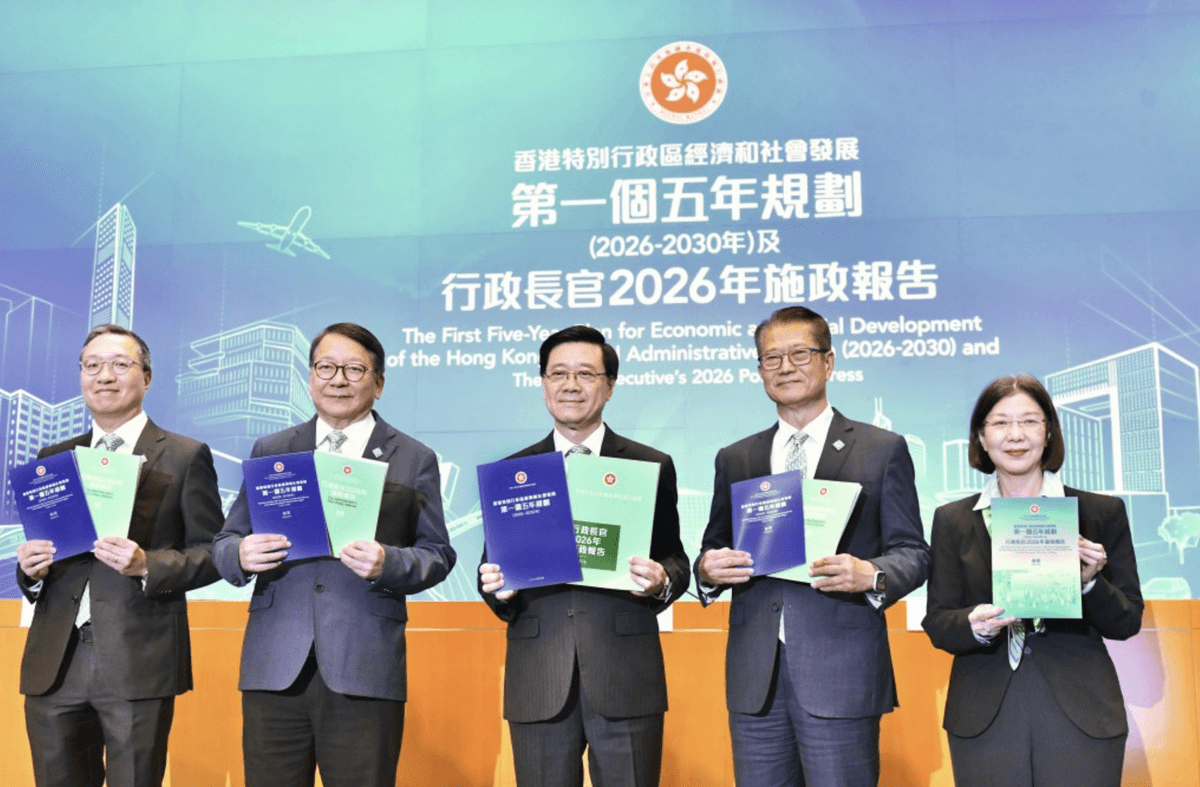
Hong Kong’s first Five-Year Plan (2026–2030) and Chief Executive John Lee’s final Policy Address of his term were released on 16 September. Sing Tao News Corporation’s online survey, conducted from 19 to 28 September with 8,808 responses, found that 67% of respondents were satisfied or very satisfied with the Five-Year Plan, while 66% felt the same about the Policy Address — higher than last year’s roughly 62%. Another 67% agreed the documents had strengthened their confidence in Hong Kong’s prospects.
When asked which measures in the Five-Year Plan would most help long-term development (up to three choices), the top pick at 16% was the new administrative framework: “Five-Year Plan leads, annual Policy Address implements, Budget supports, and annual reports give account.” Strengthening the four traditional centres and the talent hub ranked second at 10%. Three items each drew 9% support: cutting the public-housing composite waiting time to under four years by 2030–31, building “three innovation and technology parks and five R&D institutions,” and reinforcing Hong Kong’s role as a global offshore renminbi hub. The Northern Metropolis university towns proposal received 8%.
Legislators welcomed the results. Yang Yongjie called the strong backing for the administrative framework a positive signal that residents want clear long-term direction with concrete delivery mechanisms. He also noted that the public-housing target reaffirms housing as a top priority. Lam Chun-sing observed that the public is increasingly accustomed to longer-term planning beyond annual policy addresses. Wong Kam-leung said the university-town support reflects growing recognition that industry-academia-research collaboration is key to Hong Kong’s economic transformation.
The findings point to broad endorsement of more structured medium- to long-term planning while livelihood issues, especially housing, remain central.