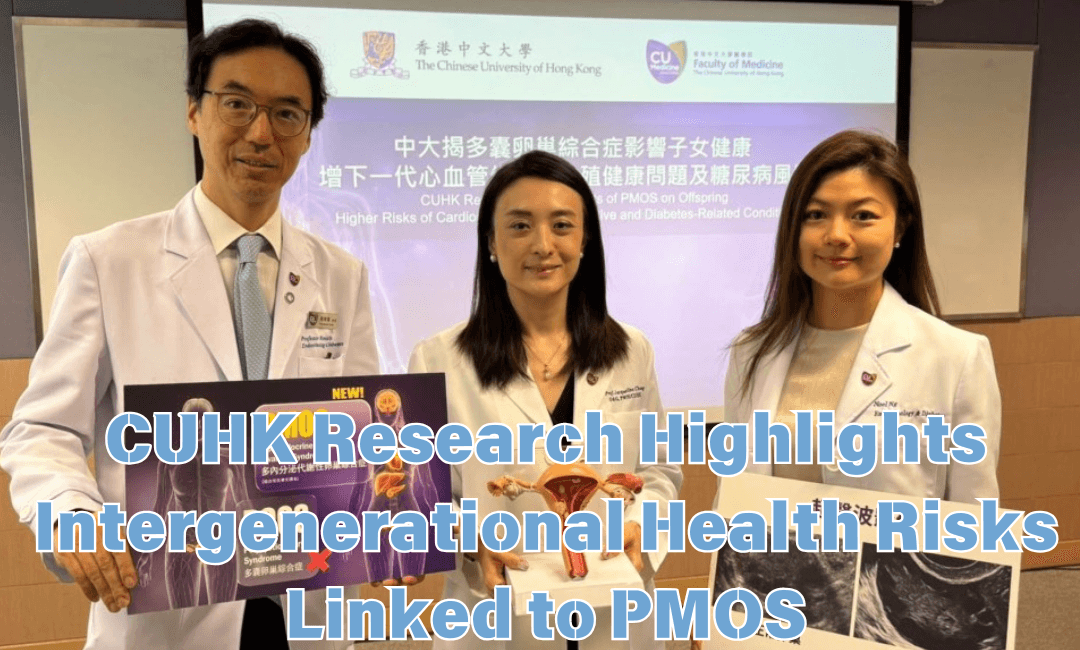
A landmark investigation by the Faculty of Medicine at The Chinese University of Hong Kong (CUHK) reveals that polyendocrine metabolic ovarian syndrome (PMOS), previously termed polycystic ovary syndrome (PCOS), exerts far-reaching health consequences by significantly elevating metabolic and endocrine risks for the next generation.
Conducted between 2020 and 2024, the study evaluated 71 mothers diagnosed with PMOS and their children aged 15 to 25, comparing them against a control group of 506 healthy mothers and their offspring. The results showed a stark intergenerational effect: 58.3 percent of daughters born to mothers with PMOS suffered from menstrual irregularities, representing a risk 3.6 times higher than that of the control group, with over 10 percent going on to develop PMOS themselves. Meanwhile, male offspring were not spared, facing nearly triple the risk of developing hypertension and metabolic syndrome compared to their peers.
Addressing the findings, Dr. Jacqueline Chung Pui-wah, Chair of CUHK's Department of Obstetrics and Gynaecology, explained that while the precise etiology of PMOS remains unknown, insulin resistance plays a central role. She highlighted that 50 to 60 percent of patients can improve their condition through lifestyle weight management, while surgical intervention allows 70 to 80 percent of patients to achieve natural ovulation.
Further expanding on the system-wide impact, Professor Ronald Ma Ching-wan from the Department of Medicine and Therapeutics emphasized that PMOS involves broad hormonal dysregulation affecting both reproductive health and metabolic stability. He noted that nearly a quarter of PMOS patients suffer from metabolic syndrome, leaving them with three times the baseline risk for developing type 2 diabetes. Consequently, lead researcher Noel Ng Yat-hey urged proactive medical tracking for children of PMOS patients, advocating for routine clinical screenings to identify and manage cardiovascular and metabolic vulnerabilities early in life.