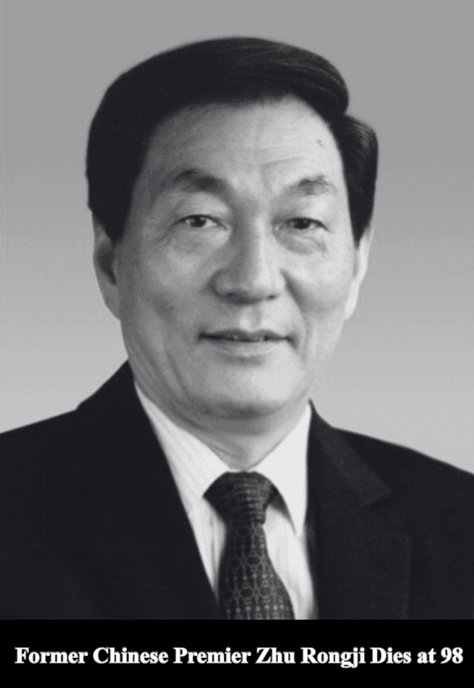
Former Chinese Premier Zhu Rongji, a key architect of China’s economic reforms and its entry into the World Trade Organization, has died at the age of 98. He passed away in Beijing on the morning of August 12, 2026, after medical treatment failed, according to an official obituary released by Xinhua News Agency.
The joint obituary issued by the Communist Party of China Central Committee, the Standing Committee of the National People’s Congress, the State Council, and the National Committee of the Chinese People’s Political Consultative Conference described Zhu’s death as a major loss to the Party and the country. It praised him as an outstanding member of the Communist Party, a loyal communist fighter tempered by long tests, and an outstanding proletarian revolutionary, statesman, and leader of the Party and state.
Zhu served as premier from 1998 to 2003. During his tenure, he steered China through the Asian financial crisis and major domestic floods. The official notice highlighted his efforts to advance reform and opening-up and modernisation. These included policies to expand external opening, encourage exports, maintain the renminbi’s value against devaluation, pursue market diversification and a quality-first strategy, attract foreign investment, and better utilise both domestic and international markets and resources. He also worked to safeguard Hong Kong’s status as an international financial centre and led the difficult negotiations that secured China’s accession to the World Trade Organization, deepening the country’s integration into the global economy.
The obituary emphasised Zhu’s deep affection for the Chinese people. It noted that he insisted officials remember they are public servants of the people, dare to speak the truth, and not fear offending others while striving to deliver practical results for the public. After stepping down from leadership positions, he continued to firmly support the Party’s efforts to improve its conduct, build clean government, and combat corruption.
The statement characterised Zhu’s life as one of revolution, struggle, and glory, dedicated to serving the people and the cause of communism. It called on the nation to turn grief into strength and to learn from his revolutionary spirit, lofty character, and fine work style.
Born in October 1928 in Changsha, Hunan province, Zhu rose through the ranks after earlier political setbacks and became known for his tough, no-nonsense approach to economic restructuring, including reforms of state-owned enterprises, the banking system, and fiscal policy.