Heavy rain in Japan’s Chiba Prefecture kills at least four and strands thousands at Narita Airport
Heavy rain in Japan’s Chiba Prefecture kills at least four and strands thousands at Narita Airport
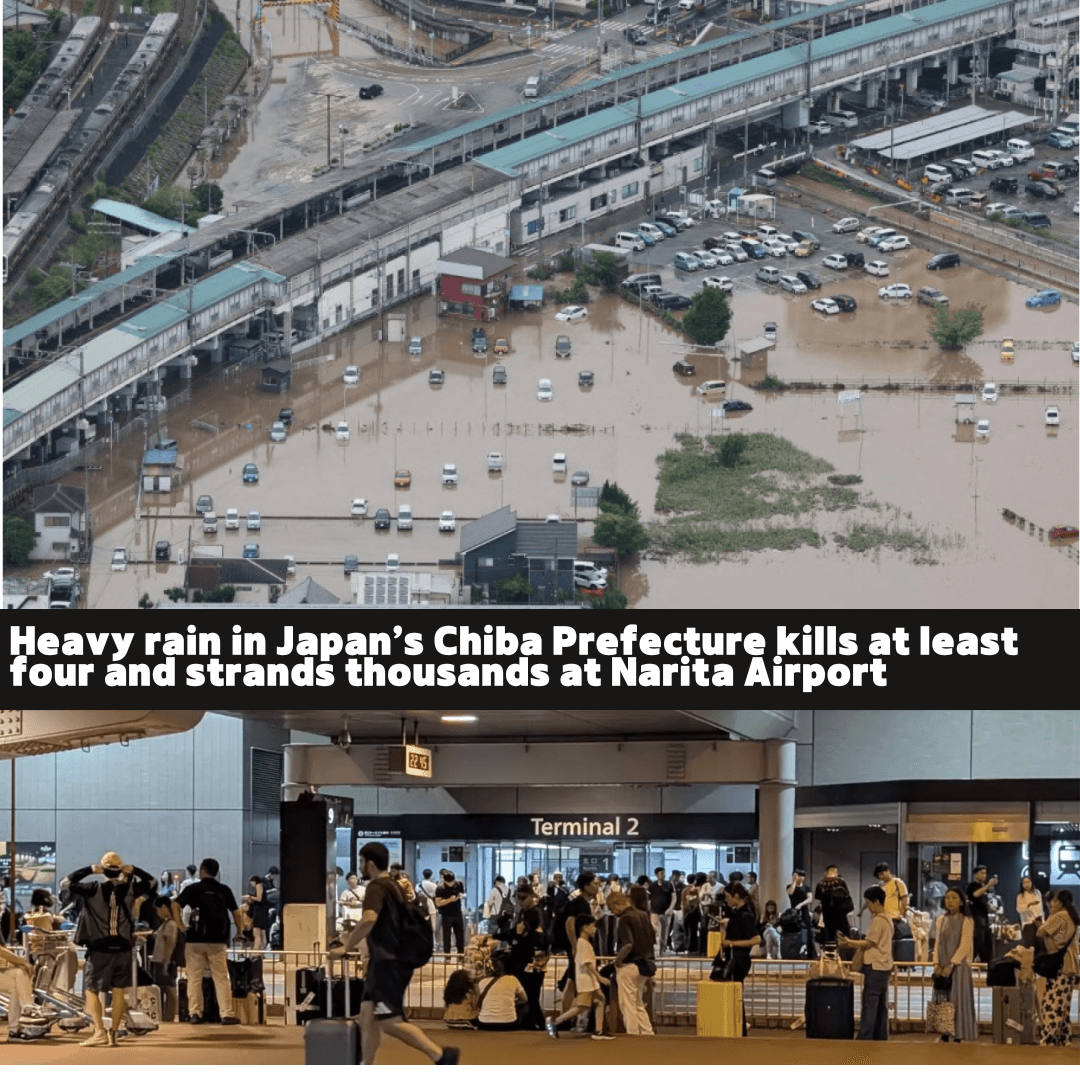
At least four people have died and one remains missing after record-breaking torrential rain battered Japan’s Chiba Prefecture on August 13, 2026. The Japan Meteorological Agency issued its highest-level “Level 5” heavy rain special warning for parts of the prefecture — the first time such an alert has been declared in the area — as intense rainfall triggered flooding, landslides and widespread disruption.
Authorities confirmed the fatalities in cities including Ichikawa, Sakura and Yachiyo. Victims included a man found floating on a flooded road and a woman trapped in a submerged vehicle. Power outages affected tens of thousands of households, and dozens of homes suffered flooding.
Transport links were severely hit. Rail services connecting to Narita International Airport were suspended, leaving approximately 7,000 passengers stranded overnight at the airport as of early on August 14. Airport staff distributed drinking water, biscuits and sleeping bags to those affected. One passenger returning from South Korea said he considered taking a taxi to his home in Shirai City but abandoned the idea after seeing long queues at the taxi stand and instead spent the night at the terminal.
JR East reported that services on lines within Chiba Prefecture began gradually resuming from the morning of August 14. The section between Narita Airport and Narita Station reopened, while the Chiba–Narita stretch was expected to recover by evening. The Narita Express (N’EX) was scheduled to restart after 3 p.m., though several limited express services — including the Shiosai, Wakashio and Sazanami — remained suspended for the full day.
Keisei Electric Railway services also faced disruption from the heavy rain and a transformer station failure. Although trains resumed running, passengers were warned of possible delays exceeding 30 minutes or temporary cancellations. The company urged travellers to check the latest information online before setting out.
By the morning of August 14 the Level 5 warnings had been downgraded, but officials continued to caution residents about the ongoing risk of landslides and flooding. Local authorities and the Self-Defense Forces assisted stranded travellers, while recovery efforts focused on restoring transport and power.
The Japan Meteorological Agency described the rainfall as reaching an “unprecedented” level in the region, with some areas recording extreme hourly and cumulative totals far above seasonal averages.