Preliminary Plans for Guangzhou-Shenzhen Second High-Speed Rail Southern Extension to Hong Kong’s Northern Metropolis Released
Preliminary Plans for Guangzhou-Shenzhen Second High-Speed Rail Southern Extension to Hong Kong’s Northern Metropolis Released
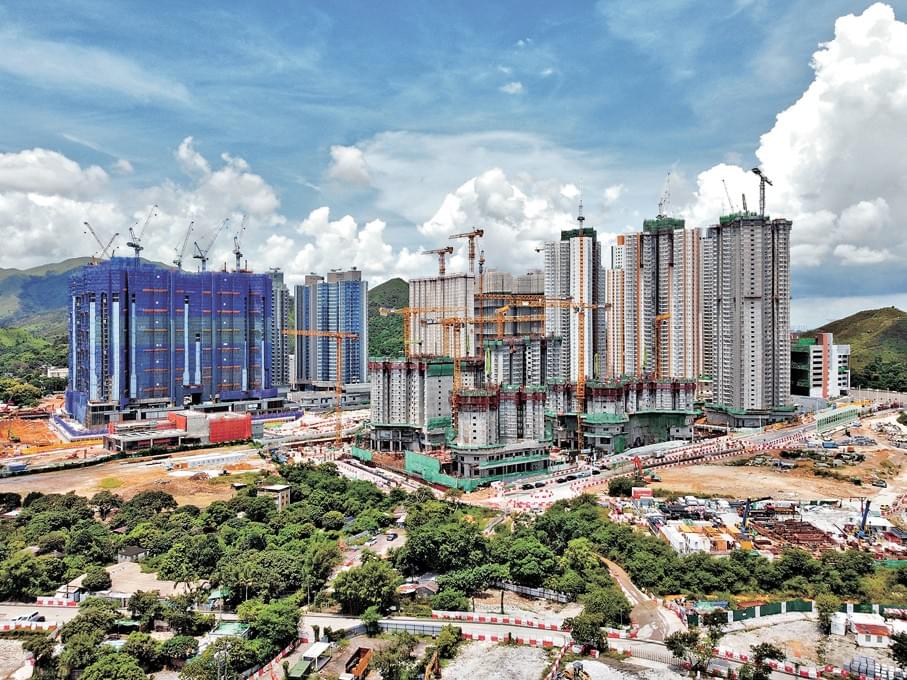
Preliminary research proposals for extending the Guangzhou-Shenzhen Second High-Speed Rail southward to connect with Hong Kong’s Northern Metropolis have been formulated, according to reports from relevant departments.
Guangdong Province’s 15th Five-Year Plan outline explicitly calls for advancing cross-boundary rail projects such as the Hong Kong-Shenzhen Western Railway and building a “Greater Bay Area on rails,” while steadily progressing the Guangzhou-Shenzhen Second High-Speed Rail. Sources indicate the project aims to begin construction during the 15th Five-Year Plan period. Studies on linking its southern extension to Hong Kong’s Northern Metropolis have produced several preliminary options, including an interchange at the Qianhai hub, a shared corridor with the Hong Kong-Shenzhen Western Railway, and a newly built high-speed rail line. Officials stressed that these remain at the planning and pre-research stage and will require further study and consultation between Guangdong, Hong Kong and the national level.
According to initial planning, the Guangzhou-Shenzhen Second High-Speed Rail will start from Guangzhou North Station, pass through Baiyun Airport, Guangzhou Huangpu and Dongguan’s Nancheng area, and terminate at Shenzhen Airport East hub. Once completed, it is expected to enable half-hour travel between the main urban areas of Guangzhou and Shenzhen and support efficient air-rail intermodal transport, strengthening integration among Guangzhou, Dongguan, Shenzhen and Hong Kong. Guangdong’s plan positions the line as key infrastructure for deepening strategic coordination between Guangzhou and Shenzhen. Cities along the route are already conducting preliminary work on hub site selection and land reservation. Dongguan’s rail transport authorities have indicated that the Dongguan Central Station is preliminarily planned for the Hadi area of Nancheng.
For the southern extension to Hong Kong’s Northern Metropolis, three main options are under comparison. The Qianhai hub interchange scheme would extend the line to Qianhai, where passengers would transfer to the cross-boundary section of the Hong Kong-Shenzhen Western Railway to enter the Northern Metropolis. The shared-corridor option would have the southern extension share a corridor with the Hong Kong-Shenzhen Western Railway in certain sections, using a “separate tracks, same corridor” design and arriving at the Hung Shui Kiu hub. The newly built line option would continue south from Shenzhen Airport East through Qianhai and then cross the boundary via an underground tunnel into the Northern Metropolis, where a new high-speed rail station would be built.
Cross-boundary passenger traffic on the Guangzhou-Shenzhen-Hong Kong High-Speed Rail exceeded 24 million trips in the first nine months of this year, up 11% year-on-year. Hong Kong’s high-speed rail network now connects to 114 mainland stations. The Hong Kong-Shenzhen Western Railway, measuring 18.1 km in total (about 7.3 km in Hong Kong and 10.8 km in Shenzhen), will be built entirely underground. Hong Kong stations are planned at Hung Shui Kiu, Ha Tsuen and Lau Fau Shan, while Shenzhen stations will be at Shenzhen Bay Port and Qianhaiwan. The Hong Kong section is expected to be ready for tender next year and targeted for opening in 2035.
The HKSAR Government’s Transport and Logistics Bureau confirmed that it is working with Shenzhen authorities to advance both the Northern Link and the Hong Kong-Shenzhen Western Railway (Hung Shui Kiu to Qianhai), with target completion years of 2034 and 2035 respectively. Unlike dedicated high-speed rail, these cross-boundary lines will serve both cross-boundary travel and local commuting, supported by convenient co-location clearance arrangements. Both sides will also reserve flexibility for future northward and southward extensions to meet long-term regional development needs.
Legislative Council member Yiu Ming has called for the government to study extending the Hong Kong-Shenzhen Western Railway southward to Hong Kong International Airport and northward to Shenzhen Bao’an Airport, creating a complementary “twin-city, twin-airport” air-rail network, and potentially upgrading related stations to serve as a second high-speed rail gateway for Hong Kong.