Trump’s Intervention in Balogun Red Card Sparks Major Controversy at World Cup 2026
Trump’s Intervention in Balogun Red Card Sparks Major Controversy at World Cup 2026
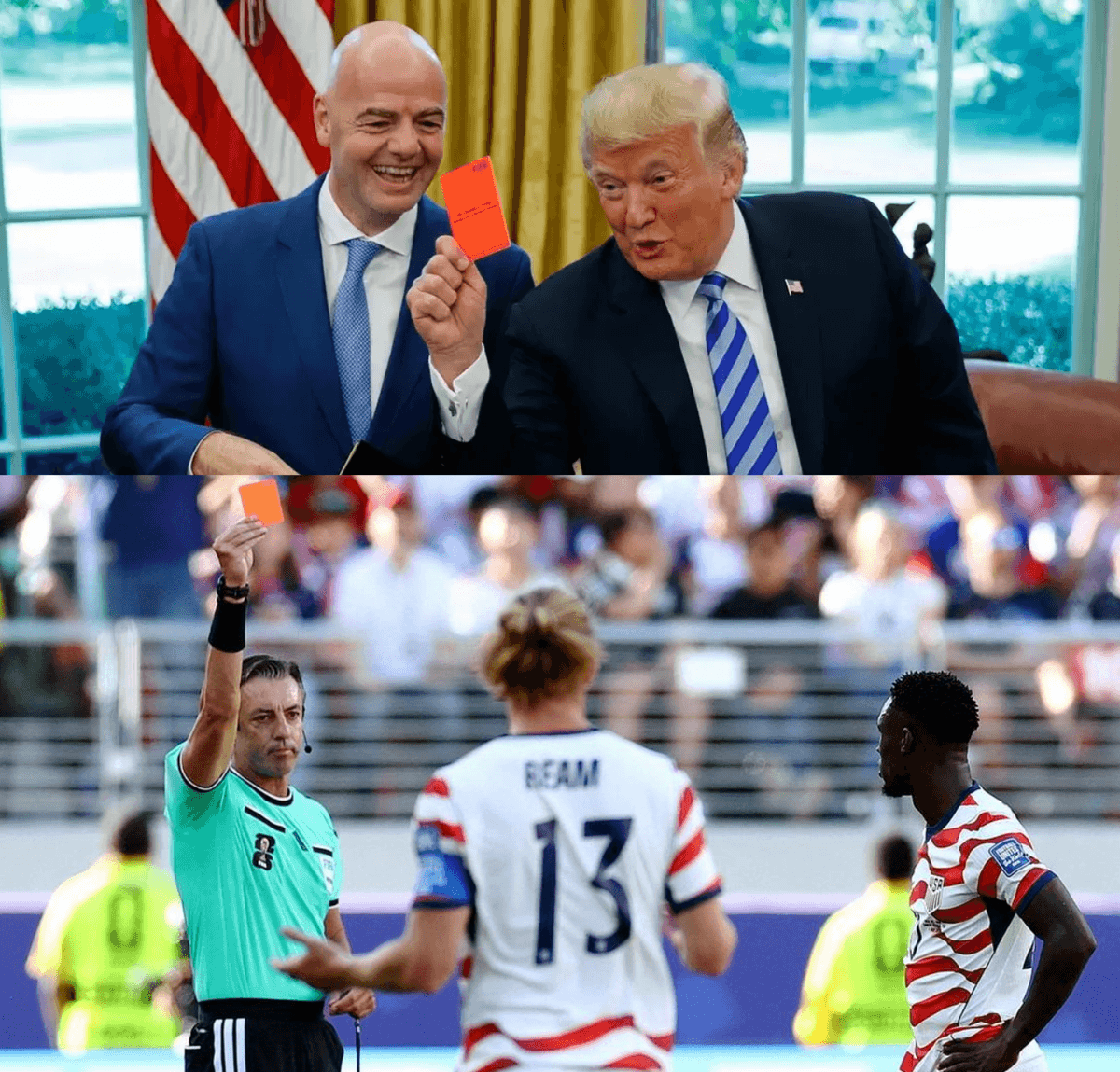
A major controversy has erupted at the 2026 FIFA World Cup after US President Donald Trump personally lobbied FIFA to overturn a red card suspension for American striker Folarin Balogun.
Balogun was sent off following a VAR review during the USA’s Round of 32 match against Bosnia and Herzegovina. Under normal FIFA rules, the red card would have resulted in an automatic one-match ban, ruling him out of the quarter-final against Belgium.
However, after Trump publicly criticised the decision and reportedly contacted FIFA President Gianni Infantino, FIFA made a highly unusual ruling. The organisation suspended the implementation of Balogun’s ban for a one-year probationary period, citing a broad clause in its disciplinary code.
Trump later celebrated the decision on Truth Social, writing: “Thank you to FIFA for doing what was right, and reversing a great injustice!”
The move has triggered widespread outrage across the football world. Belgium’s coach Rudi Garcia reacted angrily, joking that FIFA had turned July 5 into April Fools’ Day. The Royal Belgian Football Association issued strong statements condemning the decision and has launched an appeal.
Other national teams and football associations have also criticised the ruling. UEFA described it as crossing a “red line,” while coaches such as Norway’s Ståle Solbakken and England’s Thomas Tuchel questioned the integrity and consistency of the competition. German FA President Bernd Neuendorf called for immediate clarification regarding political interference in the sport.
The close relationship between Trump and Infantino — who previously created a special FIFA Peace Prize for the US President — has come under renewed scrutiny.
Despite the controversy, Balogun played in the quarter-final against Belgium. However, the United States were ultimately eliminated from the tournament.
This case has raised serious concerns about political influence in football and whether the decision could set a dangerous precedent for future tournaments. FIFA has so far defended its ruling, but faces mounting pressure from multiple football associations.
The incident has overshadowed the on-pitch action and highlighted the growing intersection between politics and sport at the 2026 World Cup.