Wang Yi Promotes Green Energy in Nordic Visit, Aims to Ease China-Europe Trade Frictions; Scholars: Russia-Ukraine Shadow Remains Major Obstacle
Wang Yi Promotes Green Energy in Nordic Visit, Aims to Ease China-Europe Trade Frictions; Scholars: Russia-Ukraine Shadow Remains Major Obstacle
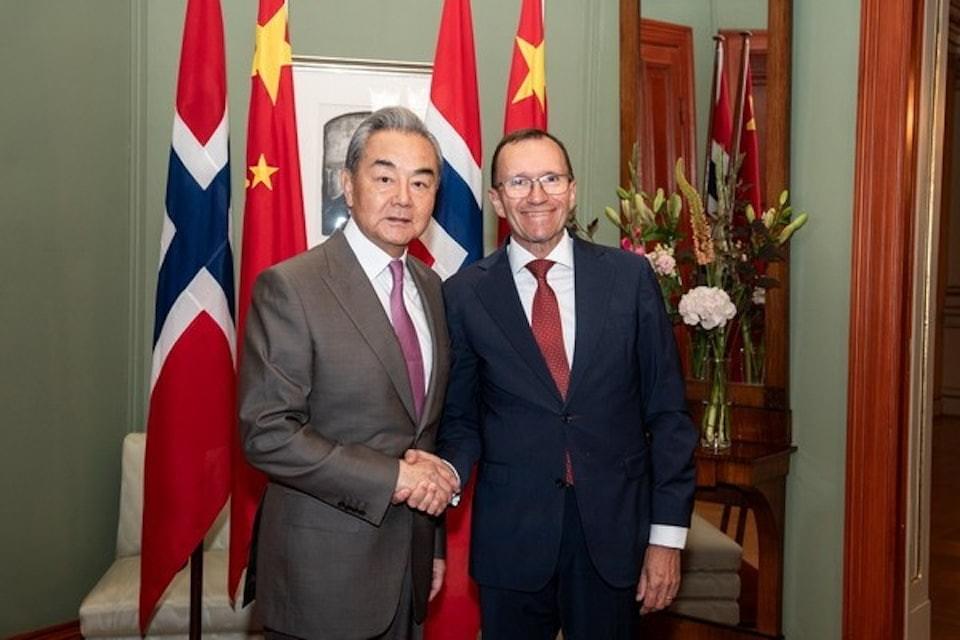
Chinese Politburo member and Foreign Minister Wang Yi conducted an official visit to Denmark, Sweden, Finland, and Norway from July 2 to 7. Amid intense global geopolitical shifts and escalating China-Europe trade tensions — particularly over electric vehicle tariffs — this “four-nation Nordic tour” represents a key element of Beijing’s diplomatic offensive in Europe.
According to Chinese Foreign Ministry readouts and the list of outcomes released on Wednesday (July 8), the central theme of the trip was clear: using green transformation, free trade, multilateralism, and people-to-people exchanges as entry points to position the Nordic countries as a relatively moderate and pragmatic gateway within China-Europe relations.
Wang Yi’s statements throughout the itinerary were highly consistent and targeted, seeking to dismantle Europe’s defensive posture toward China through precise “industrial incentives” and “multilateral narratives.”
In Denmark, Wang emphasized green cooperation, scientific and technological innovation, green shipping, healthcare, and cultural exchanges. He reiterated that “China and Europe are partners, not rivals,” and expressed hope that Denmark would play a constructive role in promoting healthy and stable China-Europe relations. In Sweden, he highlighted that Sweden was the first Western country to establish diplomatic ties with the People’s Republic of China, noting that China-Sweden relations are “continuing to warm up and improve,” with potential for expanded cooperation in technological innovation, green transformation, circular economy, and artificial intelligence.
In Finland, cooperation was framed within the China-Finland Joint Work Plan, focusing on green transformation, scientific and technological innovation, and artificial intelligence. Wang explicitly cautioned that trade and investment consultation mechanisms should not become tools for unilateral pressure. In non-EU member Norway, he stressed the green transformation dialogue mechanism, the China-Norway free trade agreement, clean energy, electric vehicles, green shipping, and the circular economy.
The outcomes list released after the visit underscored that China and the four countries support strengthening China-Europe dialogue at all levels. It positively evaluated recent progress, such as the establishment of a China-Europe trade and investment consultation mechanism, and expressed support for both sides to continue working toward each other to find appropriate solutions to trade differences.
Professor Wang Yiwei of the School of International Relations at Renmin University of China told *Lianhe Zaobao* that this was the first time in over a decade that a Chinese foreign minister had conducted a concentrated visit to all four Nordic countries. The trip carries strategic value in “bilateral repair, buffering China-Europe relations, global governance, and industrial cooperation.”
Wang Yiwei noted that the Nordic countries represent the free-trade, multilateralist, and green-pragmatist camp within the EU. China hopes they will speak up within the EU, advocating that “China and Europe are partners, not rivals,” and opposing decoupling, supply chain disruptions, and unilateral protectionism.
He further placed the visit in the context of Arctic and green industry strategy, arguing that the Nordics hold unique positions in carbon neutrality, circular economy, new energy, marine sustainability, and Arctic governance. This offers China opportunities to expand cooperation in new energy, batteries, wind power, hydrogen energy, artificial intelligence, the digital economy, and the “Ice Silk Road.”
However, a comparison with official statements and media reports from the Nordic countries reveals persistent concerns regarding China.
According to reports from Reuters, RFI (Radio France Internationale), and other international media, Danish Foreign Minister Lars Løkke Rasmussen repeatedly highlighted EU-China trade imbalances and China’s support for Russia as core issues both before and after Wang’s visit, while calling for EU coordination on policy toward China.
Swedish Foreign Minister Maria Malmer Stenergard stated in post-meeting interviews that she had urged Wang Yi to release Swedish citizen Gui Minhai. She added that Wang informed her the detained publisher and writer was in good health.
China-Sweden relations had earlier deteriorated due to the arrest of Gui Minhai, a Swedish-Chinese dual national (though China does not recognize dual nationality) and former shareholder of Hong Kong’s Causeway Bay Books. In 2020, he was sentenced to 10 years in prison in China on charges of “illegally providing intelligence overseas.” Sweden maintains that Gui did not voluntarily renounce his Swedish citizenship and has repeatedly called for his release.
Norwegian Prime Minister Jonas Gahr Støre confirmed after the meeting that he raised China’s support for Russia’s war in Ukraine with Wang Yi and urged Beijing to help facilitate a ceasefire and a just peace negotiation. Norway’s government press release also explicitly mentioned China’s growing security challenges to Norway, as well as human rights issues in Xinjiang, Tibet, and Hong Kong.
Taiwan’s National Chengchi University Professor Ding Shufan assessed that Wang Yi’s trip was “probably not very successful.”
Ding pointed out that China’s relations with the Nordic countries have historically weak foundations, citing issues such as the Nobel Peace Prize, the Gui Minhai case, and the sharp deterioration in European perceptions of China following the Russia-Ukraine war. He suggested the visit may have been an attempt to achieve a breakthrough in Europe or to exploit tensions between a potential Trump administration and Europe, probing whether Nordic countries are willing to diversify risks and maintain engagement with Beijing.
Ding acknowledged substantive room for cooperation in green transformation. Due to energy security pressures from the Russia-Ukraine and Iran-related conflicts, countries cannot rely solely on oil. Given China’s near-dominant position in the global green energy industry and supply chain, practical engagement between the Nordics and China in this sector remains possible.
Nevertheless, Ding characterized such interactions as “hedging.” He noted that recent increases in engagement with Beijing by some countries are “not because Beijing is particularly attractive,” but rather driven by the Trump factor prompting risk diversification. However, unresolved European concerns over China’s support for Russia will continue to impose significant limits on cooperation.
Song Wen-di, a non-resident fellow at the Atlantic Council’s Global China Center, similarly observed that in an era of transactional U.S. diplomacy, Nordic countries might have been inclined to ease tensions with China to diversify risks. Yet the Ukraine war and the highly visible “comprehensive strategic partnership” between China and Russia have left Nordic governments — located on the front line of the Russian threat — with little political space for major advances in relations with Beijing.
Song therefore described Wang Yi’s visit as “gaining face but delivering limited substance — a natural result of compromise and balance.”
Viewed in the context of this diplomatic contest, Wang Yi’s Nordic tour reveals the “new normal” of current and future China-Europe relations. China can still leverage its massive market, advanced green energy industrial chain, and multilateralist rhetoric to keep European countries engaged. At the same time, Europe is no longer willing to separate economic cooperation from security concerns.
The signals available so far indicate that windows for limited, project-based cooperation between China and Europe remain open. However, for bilateral relations to move beyond selective collaboration toward fundamental improvement in the overall political relationship, the major geopolitical hurdle posed by the Russia-Ukraine war and the lack of security mutual trust remains extremely difficult to overcome.